
United States (EN)
Select your region or country.


Conference presentations
At Photonics West 2027, Hamamatsu researchers will present nine papers spanning quantum communication, biomedical optics, infrared photonics, laser technology, terahertz imaging, and precision sensing. The presentations highlight advances in photon detection, optical devices, and measurement techniques, along with their potential applications in research and industry.
Below is a list of the conferences:
- Highly sensitive InGaAs SPAD module with 1.25 GHz high-speed gating for quantum key distribution
- Quantitative deep cerebral assessment using transmission-mode time-domain near-infrared spectroscopy in extremely preterm infants born at 22-24 weeks of gestation (Invited Paper)
- High-power-density QCW laser diode bar stacks with enhanced output performance
- IR photonics for next generation applications (Invited Paper)
- Electro-optic Kerr effect in BST thin films on KTN substrates for spatial light modulators: wave-optical design and test-cell evaluation
- Very-long-wavelength infrared, coupled quantum-well quantum cascade detectors operating at room temperature
- Wide-tunable external cavity laser based on a silicon photonics for near-infrared applications
- Terahertz imaging for assessing internal uniformity in cellulose nanofiber composites
- Division balanced detection incorporating noise-based error modeling in optical heterodyne measurements
Highly sensitive InGaAs SPAD module with 1.25 GHz high-speed gating for quantum key distribution
Paper 14486-15 | January 30, 2027 @ 4:00 PM - 4:20 PM PST
Abstract
Single-photon detection at telecommunication wavelengths is essential for quantum communication, including fiber-based and free-space links. As quantum key distribution (QKD) progresses toward practical deployment, there is an increasing demand for compact, cryocooler-free, and cost-effective detectors. We have developed a high-speed stand-alone module incorporating a thermoelectrically cooled InGaAs SPAD for integration into a 1U-size system. Our in-house capability from crystal growth to module assembly enables reliable detector systems. The module employs 1.25 GHz sine-wave gating and single-mode fiber coupling, achieving a photon detection efficiency of up to 30% while suppressing dark counts and afterpulsing, thereby supporting practical QKD applications.
Presenter:

Hiroto Mizuno received his M.S. in Engineering from Toyota Technological Institute, Japan, in 2019. Since joining Hamamatsu Photonics K.K. in 2019, he has been involved in the design and development of InGaAs-based photodetectors.
Quantitative deep cerebral assessment using transmission-mode time-domain near-infrared spectroscopy in extremely preterm infants born at 22-24 weeks of gestation (Invited Paper)
Paper 14412-4 | January 31, 2027 @ 9:20 AM - 9:50 AM PST
Abstract
Transmission-mode time-domain near-infrared spectroscopy (TD-NIRS) combines quantitative measurement of tissue optical properties with enhanced sensitivity to deep cerebral regions. In this study, we applied transmission-mode TD-NIRS to 49 extremely preterm infants born at 22-24 weeks of gestation and evaluated cerebral optical and hemodynamic parameters approximately 6-7 days after birth. Infants with intraventricular hemorrhage (IVH) showed significantly higher absorption coefficients, hemoglobin concentrations, and cerebral blood volume than those without IVH. These findings demonstrate the feasibility of quantitative deep cerebral assessment in infants at the limit of viability and suggest that transmission-mode TD-NIRS may provide useful biomarkers for evaluating cerebral maturation and neurological abnormalities during early neonatal development.
Presenter:

Hiroaki Suzuki is a Section Manager at Hamamatsu Photonics K.K., Japan. He received his M.S. degree in engineering and has been engaged in the research and development of biomedical optical instrumentation for more than 20 years. His work focuses on time-domain near-infrared spectroscopy (TD-NIRS) and diffuse optical technologies for non-invasive monitoring of tissue oxygenation, hemodynamics, and optical properties. He has been actively involved in collaborative research with universities and hospitals to translate optical technologies into clinical applications, including neonatal brain monitoring and other medical diagnostics. His recent research emphasizes transmission-mode TD-NIRS for quantitative evaluation of cerebral hemodynamics in extremely preterm infants and the development of novel optical biomarkers for neonatal care. He has authored and co-authored numerous scientific publications and conference presentations in the fields of biomedical optics and clinical photonics.
High-power-density QCW laser diode bar stacks with enhanced output performance
Paper 14442-9 | January 31, 2027 @ 11:20 AM - 11:40 AM PST
Abstract
High-peak-power, high-efficiency, and high-repetition-rate quasi-continuous-wave (QCW) diode laser stacks are increasingly important for solid-state laser pumping in semiconductor processing, security, and space applications. In this work, we report on recent progress in high-power QCW diode laser bars and stacks. By optimizing facet passivation and coating technologies to suppress catastrophic optical damage (COD), we achieved a record peak output power of 2.0 kW from a single bar under 200 µs, 10 Hz pulsed operation at 18°C. Additionally, double- and triple-junction structures were developed, and the driving current at 1 kW output was successfully reduced.
Presenter:

Satoru Okawara received his M.S. in Engineering from Yokohama National University (Japan) in 2013. Since joining Hamamatsu Photonics K.K. in 2013, he has been involved in designing and developing GaAs-based semiconductor lasers.
IR photonics for next generation applications (Invited Paper)
Paper 14408-30 | January 31, 2027 @ 11:45 AM - 12:10 PM PST
Abstract
Infrared photonics is driving innovation across communications, analytical instrumentation, healthcare, and industrial sensing. This presentation explores emerging detector and light source technologies spanning the near-, short-wave-, and mid-infrared spectrum. Topics include advanced InGaAs detectors for high-speed optical communications and data center infrastructure, as well as single-photon avalanche diode (SPAD) technology enabling ultra-low-light measurements and next-generation dynamic light scattering (DLS) systems used in pharmaceutical research. The talk will also highlight breakthroughs in mid-infrared photonics, including high-performance detectors with improved detectivity and reduced cooling requirements, opening new opportunities in gas analysis, environmental monitoring, and wearable sensing. Advances in quantum cascade lasers (QCLs) are improving scalability and OEM integration, accelerating adoption in spectroscopy, analytical chemistry, pharmaceutical characterization, and advanced microscopy. Attendees will gain insight into the technologies and applications expected to shape the next generation of infrared-enabled systems and instruments.
Presenter:

Gary Spingarn is Product Manager at Hamamatsu, where he is responsible for establishing market strategy for mid-infrared products and for advancing long-term projects. A chemical engineer by training, Gary started off in industrial gas delivery and applications before moving into the photonics space. From large steel furnaces to semiconductor fabrication to analytical spectroscopy, Gary has spent a decade helping OEMs and researchers unleash the power of the mid-infrared.
Electro-optic Kerr effect in BST thin films on KTN substrates for spatial light modulators: wave-optical design and test-cell evaluation
Paper 14485-12 | February 2, 2027 @ 2:45 PM - 3:00 PM PST
Abstract
Potassium tantalate niobate (KTN) is a promising electro-optic material for high-speed spatial light modulators (SLMs), but electric-field crosstalk can degrade phase modulation performance. In this study, we investigate barium strontium titanate (BST) thin films on KTN substrates to improve electric-field control and electro-optic response. Electrostatic and wave-optical simulations incorporating Kerr and Pockels effects were performed using temperature-dependent material models. The results indicate that BST layers reduce crosstalk and produce phase profiles closer to the ideal rectangular distribution through quadratic refractive-index modulation. BST thin films were deposited on KTN substrates by pulsed laser deposition, and their optical and dielectric properties were characterized experimentally. We also evaluated holographic filtering and etalon-coated KTN samples. The combined simulation and experimental results demonstrate the potential of BST/KTN hybrid structures for high-fidelity electro-optic SLMs based on crystal-phase control.
Presenter:

Hiroto Sakai earned a degree in Information Science from Osaka University and joined the Central Research Laboratory of Hamamatsu Photonics K.K. He has extensive experience in hologram design, spatial light modulator (SLM) development, and applied research in holography. His research interests include computational optics, wavefront control, and the application of photonic technologies to advanced imaging and optical systems.
Very-long-wavelength infrared, coupled quantum-well quantum cascade detectors operating at room temperature
Paper 14475-43 | February 2, 2027 @ 4:40 PM - 4:55 PM PST
Abstract
We present a very-long-wavelength infrared quantum cascade detector operating at room temperature. Extending quantum cascade detectors to longer wavelengths range is challenging because the small intersubband transition energy makes efficient carrier extraction increasingly difficult at elevated temperatures. The detector employs a coupled quantum-well active region to facilitate photocurrent extraction under these conditions. At 300 K, the device exhibits a peak responsivity of 6.2 mA/W at 12.6 µm and a long-wavelength cutoff of 14.3 µm, defined at 10% of the peak responsivity. These results demonstrate room-temperature photodetection extending beyond 14 µm and establish the feasibility of quantum cascade detectors in the very-long-wavelength infrared regime.
Presenter:

Kazuki Horita received the Master of Engineering degree from the University of Fukui, Japan, in 2012. In the same year, he joined the Central Research Laboratory, Hamamatsu Photonics K.K., Japan, where he has been engaged in research on terahertz spectroscopy and sensing, and mid-infrared quantum cascade devices. He is a member of the Japan Society of Applied Physics (JSAP).
Wide-tunable external cavity laser based on a silicon photonics for near-infrared applications
Paper 14469-32 | February 2, 2027 @ 5:20 PM - 5:40 PM PST
Abstract
Wide tunable lasers are employed in applications such as spectroscopy and biomedical sensing. In this work, we developed a wide tunable external-cavity laser by integrating an in-house fabricated silicon photonics (SiPh) chip with a semiconductor optical amplifier (SOA). To achieve a wide tuning range, three wavelength-selection filters were integrated and their design was optimized. The laser demonstrated a tuning range of up to 10%, whereas previously reported SiPh-based tunable lasers typically achieve 2–3% of the center wavelength in the 1300–1550 nm wavelength region. The device architecture, fundamental characteristics, and initial results of SOA flip-chip bonding for scalable manufacturing are reported.
Presenter:
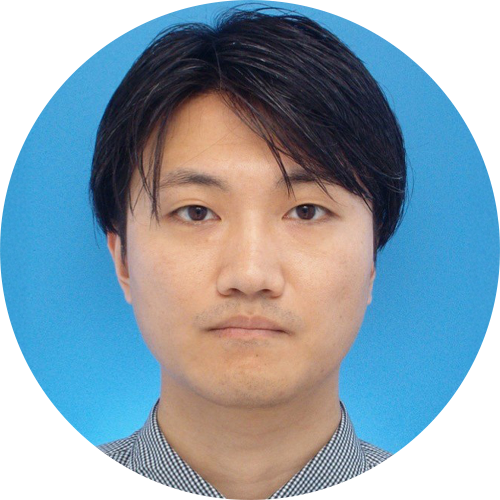
Takuya Hashimoto received his M.S. in Engineering from Tokushima University, Japan, in 2018. Since joining Hamamatsu Photonics K.K. in 2018, he has been involved in developing photonic integrated circuits.
Terahertz imaging for assessing internal uniformity in cellulose nanofiber composites
Paper 14461-42 | February 3, 2027 @ 1:25 PM - 1:45 PM PST
Abstract
Cellulose nanofiber (CNF) composites are sustainable materials derived from renewable resources such as wood. To promote their practical use, uniform CNF dispersion in resin matrices must be evaluated. In this study, terahertz imaging was applied to CNF composites prepared by different procedures to intentionally control their uniformity. The imaging successfully visualized differences among the samples. Mechanical properties are also being evaluated to clarify the relationship between terahertz imaging results and material performance.
Presenter:

Atsushi Nakanishi received a Master of Engineering degree from Kyushu University, Fukuoka, Japan, in 2006 and a Doctoral degree in Engineering from the University of Tokyo, Tokyo, Japan, in 2024. He joined Hamamatsu Photonics K.K., Hamamatsu, Shizuoka, Japan, in 2006. He is a Senior Researcher at the Central Research Laboratory of Hamamatsu Photonics K.K., and his research interests include technology that contributes to resource recycling using terahertz waves. He is a member of Optica.
Division balanced detection incorporating noise-based error modeling in optical heterodyne measurements
Paper 14481-31 | February 3, 2027 @ 4:00 PM - 4:15 PM PST
Abstract
In conventional balanced detection (BD) for optical heterodyne measurements, two beat signals with π phase shift between them are generated using two ports of a beam mixer, and one of them is subtracted from the other to eliminate the DC component, which enables a higher signal-to-noise ratio. However, the relative intensity noise (RIN) of the laser source remains as a multiplicative factor of the beat signal, which degrades the precision of heterodyne detection. To solve this issue, we propose division balanced detection (DBD), in which the same optical system as the BD is used and one of the π-shifted signals is divided by the other. To suppress the large fluctuation of the division signal around the minima of the denominator signal, the beat signal noise is modeled and incorporated in the phase calculation process. Experimentally, the single-shot 3σ repeatability is improved from λ/2,800 to λ/130,000 by applying the DBD. The DBD technique for heterodyne detection is applicable to displacement sensing, optical coherent communication, and precise interferometry such as gravitational-wave detection.
Presenter:

Naoaki Kato is a researcher at Central Research Laboratory in Hamamatsu Photonics K.K. in Japan. He earned a B.Sc. (physics) degree from The University of Tokyo in 2018. His current research is about liquid crystal on silicon-spatial light modulators (LCOS-SLMs). He published two papers (in Optics Express and Japanese Journal of Applied Physics) related to precise retardation (birefringence) measurement and evaluation of LCOS-SLMs and anisotropic optical crystals, and he filed six related patent applications (one has been granted). In addition, he is also interested in a spectral-broadness-tunable Littman/Metcalf external cavity diode laser, whose tunability is enabled by an SLM. He published its simulation study in Optics Express and filed three pertinent patent applications (one has been granted). He also published one paper as the first author and two papers as a coauthor, and he was granted two patents as a co-inventor.
- Confirmation
-
It looks like you're in the . If this is not your location, please select the correct region or country below.
You're headed to Hamamatsu Photonics website for US (English). If you want to view an other country's site, the optimized information will be provided by selecting options below.
In order to use this website comfortably, we use cookies. For cookie details please see our cookie policy.
- Cookie Policy
-
This website or its third-party tools use cookies, which are necessary to its functioning and required to achieve the purposes illustrated in this cookie policy. By closing the cookie warning banner, scrolling the page, clicking a link or continuing to browse otherwise, you agree to the use of cookies.
Hamamatsu uses cookies in order to enhance your experience on our website and ensure that our website functions.
You can visit this page at any time to learn more about cookies, get the most up to date information on how we use cookies and manage your cookie settings. We will not use cookies for any purpose other than the ones stated, but please note that we reserve the right to update our cookies.
1. What are cookies?
For modern websites to work according to visitor’s expectations, they need to collect certain basic information about visitors. To do this, a site will create small text files which are placed on visitor’s devices (computer or mobile) - these files are known as cookies when you access a website. Cookies are used in order to make websites function and work efficiently. Cookies are uniquely assigned to each visitor and can only be read by a web server in the domain that issued the cookie to the visitor. Cookies cannot be used to run programs or deliver viruses to a visitor’s device.
Cookies do various jobs which make the visitor’s experience of the internet much smoother and more interactive. For instance, cookies are used to remember the visitor’s preferences on sites they visit often, to remember language preference and to help navigate between pages more efficiently. Much, though not all, of the data collected is anonymous, though some of it is designed to detect browsing patterns and approximate geographical location to improve the visitor experience.
Certain type of cookies may require the data subject’s consent before storing them on the computer.
2. What are the different types of cookies?
This website uses two types of cookies:
- First party cookies. For our website, the first party cookies are controlled and maintained by Hamamatsu. No other parties have access to these cookies.
- Third party cookies. These cookies are implemented by organizations outside Hamamatsu. We do not have access to the data in these cookies, but we use these cookies to improve the overall website experience.
3. How do we use cookies?
This website uses cookies for following purposes:
- Certain cookies are necessary for our website to function. These are strictly necessary cookies and are required to enable website access, support navigation or provide relevant content. These cookies direct you to the correct region or country, and support security and ecommerce. Strictly necessary cookies also enforce your privacy preferences. Without these strictly necessary cookies, much of our website will not function.
- Analytics cookies are used to track website usage. This data enables us to improve our website usability, performance and website administration. In our analytics cookies, we do not store any personal identifying information.
- Functionality cookies. These are used to recognize you when you return to our website. This enables us to personalize our content for you, greet you by name and remember your preferences (for example, your choice of language or region).
- These cookies record your visit to our website, the pages you have visited and the links you have followed. We will use this information to make our website and the advertising displayed on it more relevant to your interests. We may also share this information with third parties for this purpose.
Cookies help us help you. Through the use of cookies, we learn what is important to our visitors and we develop and enhance website content and functionality to support your experience. Much of our website can be accessed if cookies are disabled, however certain website functions may not work. And, we believe your current and future visits will be enhanced if cookies are enabled.
4. Which cookies do we use?
There are two ways to manage cookie preferences.
- You can set your cookie preferences on your device or in your browser.
- You can set your cookie preferences at the website level.
If you don’t want to receive cookies, you can modify your browser so that it notifies you when cookies are sent to it or you can refuse cookies altogether. You can also delete cookies that have already been set.
If you wish to restrict or block web browser cookies which are set on your device then you can do this through your browser settings; the Help function within your browser should tell you how. Alternatively, you may wish to visit www.aboutcookies.org, which contains comprehensive information on how to do this on a wide variety of desktop browsers.
5. What are Internet tags and how do we use them with cookies?
Occasionally, we may use internet tags (also known as action tags, single-pixel GIFs, clear GIFs, invisible GIFs and 1-by-1 GIFs) at this site and may deploy these tags/cookies through a third-party advertising partner or a web analytical service partner which may be located and store the respective information (including your IP-address) in a foreign country. These tags/cookies are placed on both online advertisements that bring users to this site and on different pages of this site. We use this technology to measure the visitors' responses to our sites and the effectiveness of our advertising campaigns (including how many times a page is opened and which information is consulted) as well as to evaluate your use of this website. The third-party partner or the web analytical service partner may be able to collect data about visitors to our and other sites because of these internet tags/cookies, may compose reports regarding the website’s activity for us and may provide further services which are related to the use of the website and the internet. They may provide such information to other parties if there is a legal requirement that they do so, or if they hire the other parties to process information on their behalf.
If you would like more information about web tags and cookies associated with on-line advertising or to opt-out of third-party collection of this information, please visit the Network Advertising Initiative website http://www.networkadvertising.org.
6. Analytics and Advertisement Cookies
We use third-party cookies (such as Google Analytics) to track visitors on our website, to get reports about how visitors use the website and to inform, optimize and serve ads based on someone's past visits to our website.
You may opt-out of Google Analytics cookies by the websites provided by Google:
https://tools.google.com/dlpage/gaoptout?hl=en
As provided in this Privacy Policy (Article 5), you can learn more about opt-out cookies by the website provided by Network Advertising Initiative:
http://www.networkadvertising.org
We inform you that in such case you will not be able to wholly use all functions of our website.
Close