




Japan (EN)
Select your region or country.


Conference presentations
Join our conference presentations at Photonics West 2026 to explore breakthroughs shaping the future of light-based technology. Our presentations span the spectrum—from mid-infrared and terahertz sensing to high-power lasers and silicon photonics—advancing applications in spectroscopy, life sciences, energy research, and precision measurement.
Discover how our experts are redefining what’s possible in detection, imaging, and optical systems—one photon at a time.
Below is a list of the conferences:
- The evolving landscape of mid-infrared components and applications
- Optical control of beating behavior in cardiomyocytes using photoactivated adenylyl cyclase
- Broadband quantum cascade detectors with the anti-crossed dual-upper-state active region
- Validation of a compact 1064 nm time-domain DCS system
- Recent progress in the conceptual design of an LD-pumped 1-kJ, 10-Hz laser based on cryogenically cooled Yb:YAG scheme
- QCW laser diode bar stacks with improved performance and technology
- High-speed, wavelength-swept source based on silicon photonics: device development and application demonstration
- Development of a tunable quantum cascade laser for high-sensitivity, real-time mid-infrared spectroscopic analysis
- High-repeatability, two-dimensional optical heterodyne interferometer using cycle-to-cycle analysis
- Evaluation of mixed plastics by terahertz wave
The evolving landscape of mid-infrared components and applications
Paper 13842-29 | January 18, 2026 @ 2:45 PM - 3:15 PM PST
Abstract
The mid-infrared photonics sector is evolving rapidly, with breakthroughs in detector sensitivity, wavelength coverage, and light source flexibility. This talk explores how new detector designs can be leveraged in applications that were prohibitive in the past. Light source discussion includes the state of quantum cascade lasers, current limitations in integration and scalability, and emerging solutions to these challenges. Beyond traditional gas analysis, we highlight growth areas in process control, life sciences, and pathology. Attendees will leave with an informed perspective on the technology and market forces shaping the next generation of mid-IR systems.
Presenter:

Gary Spingarn is product manager at Hamamatsu, where he is responsible for establishing market strategy for mid-infrared products and for advancing long-term projects. A chemical engineer by training, Gary started off in industrial gas delivery and applications before moving into the photonics space. From large steel furnaces to semi-conductor fabrication to analytical spectroscopy, Gary has spent a decade helping OEMs and researchers unleash the power of the mid-infrared.
Optical control of beating behavior in cardiomyocytes using photoactivated adenylyl cyclase
Paper 13826-14 | January 17, 2026 @ 2:30 PM - 2:45 PM PST
Abstract
We investigated light-induced modulation of beating behaviors in human iPSC-derived cardiomyocytes expressing photoactivated adenylyl cyclase (PAC), an optogenetic tool that enables production of intracellular cyclic adenosine monophosphate. Blue light stimulation increased the frequency of Ca²⁺ transients, which returned to baseline within a few minutes. The effect was reversible and dependent on photon flux density. Excessive illumination temporarily halted beating, which resumed after a short delay. PAC activation also enhanced the amplitude of cell contraction, indicating that both heart rate and contractile force were modulated. These findings suggest that PAC enables precise optical control of cardiomyocyte function and may serve as a valuable tool for drug screening, toxicity testing, and optical pacing.
Presenter:

Hiromu Sato is a researcher at the Central Research Laboratory of Hamamatsu Photonics K.K. He earned his Master’s degree from Hokkaido University in 2023, where he focused on developing neural stimulation techniques using near-infrared light. During his graduate studies, he received the Dean’s Award from Hokkaido University in 2023 and the Outstanding Research Award from the Japanese Neural Network Society in 2024. His research interests include the optical control of biomolecules and biological functions, as well as their potential applications. Currently, he is engaged in developing optical manipulation techniques for iPS cell-derived cardiomyocytes via cyclic adenosine monophosphate signaling, using photoactivated adenylyl cyclase. He is also interested in expanding his research to explore optogenetic applications in drug discovery and the development of novel therapeutic tools.
Broadband quantum cascade detectors with the anti-crossed dual-upper-state active region
Paper 13908-3 | January 18, 2025 @ 9:45 AM - 10:00 AM PST
Abstract
We propose broadband quantum cascade detectors based on the dual-upper-state active region design. This approach, known for enabling broadband gain in quantum cascade lasers, is expected to also provide a wide spectral response in detectors. We developed quantum cascade detectors by implementing anti-crossed dual upper states in the absorbing transition. The devices exhibited a relative spectral width of approximately 21% and responsivity of 7.4 mA/W at 300 K for a peak wavelength of ~5.2 µm, achieving not only twice the spectral width but also an improvement in peak responsivity compared to quantum cascade detectors employing bound-to-bound design.
Presenter:

Shohei Hayashi is a staff research scientist at the Central Research Laboratory of Hamamatsu Photonics K.K., located in Shizuoka, Japan. He received his Master of Engineering degree from the Nagoya Institute of Technology, Nagoya, Japan, in 2012. In the same year, he joined Hamamatsu Photonics K.K., where he has been engaged in research on plasmonics, metasurfaces, and quantum cascade lasers and detectors. He is a member of the Japan Society of Applied Physics (JSAP).
Validation of a compact 1064 nm time-domain DCS system
Paper 13834-20 | January 18, 2026 @ 2:20 PM - 2:40 PM PST
Abstract
We developed an optical unit for a time-domain diffuse correlation spectroscopy system at 1064 nm with the aim of continuous cerebral perfusion monitoring in clinical settings. This system was designed to be sufficiently small to fit on a standard medical cart for bedside use. We validated the system by conducting phantom and human forearm cuff occlusion tests. In the human cuff occlusion test, the system’s ability to measure human blood flow was demonstrated by measuring it simultaneously with a Time-Domain NIRS system and laser Doppler flowmetry.
Presenter:

Tetsuya Mimura is a biomedical photonics engineer at Hamamatsu Photonics K.K. (Japan) and is engaged in researching near-infrared photonics for medical applications. One of his current research interests is developing a technique to noninvasively measure blood flow using near-infrared light, aiming to enhance early detection of disease and therapeutic monitoring. He contributes to interdisciplinary efforts combining photonics and diagnosis.
Recent progress in the conceptual design of an LD-pumped 1-kJ, 10-Hz laser based on cryogenically cooled Yb:YAG scheme
Paper 13876-18 | January 19, 2026 @ 8:00 AM - 8:30 AM PST
Abstract
We are conducting research and development on a laser diode (LD)-pumped, 1-kJ, 10-Hz laser technology based on a cryogenic helium gas-cooled Yb:YAG multi-disk amplification scheme, targeting applications in inertial fusion energy. Currently, we are conducting ongoing demonstration experiments with the HALIANS system at 250 J and 10 Hz. These experiments allow for the evaluation of optical component and gain medium durability under conditions of approximately 5 J/cm² beam fluence and 2.5 kW average output power, and these results are very useful for designing 1-kJ, 10-Hz lasers.
Presenter:

Dr. Takashi Sekine, a Senior Project Researcher at the Central Research Laboratory of Hamamatsu Photonics K.K., is a laser scientist specializing in high-energy pulsed solid-state laser development. His expertise centers on diode-pumped high-energy Yb:YAG ceramic lasers, achieving average outputs exceeding 1 kW. Currently, he is engaged in advancing laser technologies for a 250 J, 10 Hz demonstration system and contributing to the conceptual design of a 1-kJ, 10-Hz laser.
QCW laser diode bar stacks with improved performance and technology
Paper 13876-20 | January 19, 2026 @ 9:40 AM - 10:00 AM PST
Abstract
QCW laser diode (LD) bar stacks are crucial components as pumping sources for applications such as inertial fusion energy research, high-energy solid state lasers, and others. Recently, we developed a unique bonding technique for building a high-brightness LD stack structure, which has enabled stacking more than 50 laser diode bars with a narrow stacking pitch and operation with high injection current. We have demonstrated the highest peak output power of 56 kW and the highest power density of 29 kW/cm² from a stack of 56 LD bars with 940 nm emission under the operational conditions of a frequency of 10 Hz, a pulse width of 0.3 ms, and an injection current of 1000 A at a water-cooled temperature of 20 degrees Celsius. A maximum conversion efficiency of 66% has been attained at an operation current of 450 A, and even 59% at an operation current of 1000 A.
Presenter:

Nobuto Kageyama is a senior researcher of the Central Research Laboratory at Hamamatsu Photonics K.K., Shizuoka, Japan. He received an M.S. degree in materials engineering from Yamagata University, Yamagata, Japan, in 1999. In April 1999, he joined Hamamatsu Photonics K.K., where he was engaged in the research and development of high-power laser diodes. Since October 2023, he has been serving as the Project Leader of Focused Research Project at the Central Research Laboratory. His research interests include high-power laser diode bars and novel assembly technologies.
High-speed, wavelength-swept source based on silicon photonics: device development and application demonstration
Paper 13907-3 | January 19, 2026 @ 2:35 PM - 2:55 PM PST
Abstract
Wavelength-swept light sources are widely used in optical sensing. Their miniaturization and cost reduction could unlock new applications and broaden market adoption. We developed a compact source using a silicon photonic (SiPh) external cavity design. A reflective semiconductor optical amplifier is butt-coupled to a SiPh chip integrating three Mach-Zehnder filters with different spectral intervals, each equipped with carrier plasma phase shifters. Electrical control enables nanosecond-scale wavelength tuning, far faster than conventional thermo-optic methods. The prototype demonstrated sweeping across 1495–1545 nm. We report on the laser’s characteristics and its performance in distance and other application-specific measurements.
Presenter:

Kazuaki Maekita received his M.S. in Engineering from Kanazawa University (Japan) in 2014. Since joining Hamamatsu Photonics K.K. in 2014, he has been involved in developing photonic integrated circuits.
Development of a tunable quantum cascade laser for high-sensitivity, real-time mid-infrared spectroscopic analysis
Paper 13904-17 | January 20, 2026 @ 11:20 AM - 11:40 AM PST
Abstract
This presentation introduces a wavelength-tunable EC-QCL module designed for high-sensitivity, real-time mid-infrared spectroscopy. By using a DAU(Anti-crossed Dual-Upper-state)-QCL chip, it enables broadband, high-power spectral analysis. A Ge waveguide-based external cavity structure supports integration into photonic integrated circuits (PICs), enhancing compactness and cost efficiency. The module shows promising propagation loss and tunability, outperforming MEMS-based designs in scalability and manufacturability. Real-time liquid-phase spectroscopic analysis demonstrates its rapid, accurate detection capabilities. Future prospects include scalable production and compact deployment. This work advances mid-infrared laser technology by establishing a versatile, high-performance platform for spectroscopic applications.
Presenter:
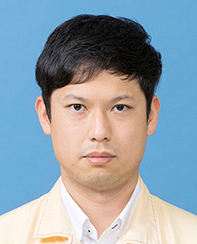
Daiki Suzuki received his M.S. in Engineering from Shizuoka University (Japan) in 2013. Since joining Hamamatsu Photonics K.K. in 2013, he has been engaged in the application development of external cavity quantum cascade lasers (EC-QCLs), with a focus on enhancing their performance and broadening their analytical applications.
High-repeatability, two-dimensional optical heterodyne interferometer using cycle-to-cycle analysis
Paper 13904-26 | January 20, 2025 @ 4:20 PM - 4:40PM PST
Abstract
We extend our developed high-repeatability optical heterodyne interferometer to two-dimensional (2D) measurement using partial scan of a camera. The analysis method is the cycle-to-cycle analysis that can improve repeatability of optical heterodyne interferometry, where the reference and sample heterodyne signals are cut at the reference-signal local minima to suppress the effects of the intensity variation synchronized with the heterodyne signal. Using the cycle-to-cycle analysis, the single-shot 3σ repeatability of the 2D retardation measurement is improved from λ/350 to λ/2900 at the camera’s center pixel. Our high-repeatability, 2D optical heterodyne interferometry is applicable to evaluating liquid-crystal devices and electro-optic modulators as well as determining the uniaxial-crystal c-axis angle distribution.
Presenter:

Naoaki Kato is a researcher at the Central Research Laboratory of Hamamatsu Photonics K.K. in Japan. He earned a B.Sc. degree (physics) from The University of Tokyo in 2018. His current research is about liquid crystal on silicon-spatial light modulators (LCOS-SLMs). He published a paper in Optics Express on precise retardation (birefringence) measurement for evaluation of LCOS-SLMs and anisotropic optical crystals, and he filed five related patent applications (one has been granted). In addition, he is also interested in a spectral-broadness-tunable Littman/Metcalf external cavity diode laser, whose tunability is enabled by an SLM. He published its simulation study in Optics Express and filed three pertinent patent applications. He also published one paper as the first author and two papers as a coauthor, and he holds two patents as a co-inventor.
Evaluation of mixed plastics by terahertz wave
Paper 13895-33 | January 21, 2026 @ 12:00 PM - 12:20 PM PST
Abstract
For recycling, identification of different plastic materials based on optical techniques is effective. However, in the case of black plastic materials, identification by visible light or near-infrared waves is difficult because of the materials’ high absorption in those wavelength regions. On the other hand, terahertz waves have high transparency for plastics, allowing the internal information of materials, even black plastics, to be obtained with terahertz waves. In this study, we evaluate samples mixed with different plastics using the terahertz absorption coefficient.
Presenter:
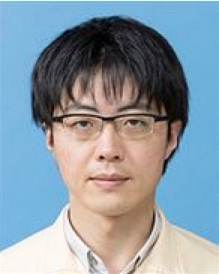
Atsushi Nakanishi received a Master of Engineering degree from Kyushu University, Fukuoka, Japan, in 2006 and a Doctoral degree in Engineering from the University of Tokyo, Tokyo, Japan, in 2024. He joined Hamamatsu Photonics K.K., Hamamatsu, Shizuoka, Japan, in 2006. He is a Senior Researcher at the Central Research Laboratory of Hamamatsu Photonics K.K., and his research interests include technology that contributes to resource recycling using terahertz waves. He is a member of Optica.
- Confirmation
-
It looks like you're in the . If this is not your location, please select the correct region or country below.
You're headed to Hamamatsu Photonics website for JP (English). If you want to view an other country's site, the optimized information will be provided by selecting options below.
In order to use this website comfortably, we use cookies. For cookie details please see our cookie policy.
- Cookie Policy
-
This website or its third-party tools use cookies, which are necessary to its functioning and required to achieve the purposes illustrated in this cookie policy. By closing the cookie warning banner, scrolling the page, clicking a link or continuing to browse otherwise, you agree to the use of cookies.
Hamamatsu uses cookies in order to enhance your experience on our website and ensure that our website functions.
You can visit this page at any time to learn more about cookies, get the most up to date information on how we use cookies and manage your cookie settings. We will not use cookies for any purpose other than the ones stated, but please note that we reserve the right to update our cookies.
1. What are cookies?
For modern websites to work according to visitor’s expectations, they need to collect certain basic information about visitors. To do this, a site will create small text files which are placed on visitor’s devices (computer or mobile) - these files are known as cookies when you access a website. Cookies are used in order to make websites function and work efficiently. Cookies are uniquely assigned to each visitor and can only be read by a web server in the domain that issued the cookie to the visitor. Cookies cannot be used to run programs or deliver viruses to a visitor’s device.
Cookies do various jobs which make the visitor’s experience of the internet much smoother and more interactive. For instance, cookies are used to remember the visitor’s preferences on sites they visit often, to remember language preference and to help navigate between pages more efficiently. Much, though not all, of the data collected is anonymous, though some of it is designed to detect browsing patterns and approximate geographical location to improve the visitor experience.
Certain type of cookies may require the data subject’s consent before storing them on the computer.
2. What are the different types of cookies?
This website uses two types of cookies:
- First party cookies. For our website, the first party cookies are controlled and maintained by Hamamatsu. No other parties have access to these cookies.
- Third party cookies. These cookies are implemented by organizations outside Hamamatsu. We do not have access to the data in these cookies, but we use these cookies to improve the overall website experience.
3. How do we use cookies?
This website uses cookies for following purposes:
- Certain cookies are necessary for our website to function. These are strictly necessary cookies and are required to enable website access, support navigation or provide relevant content. These cookies direct you to the correct region or country, and support security and ecommerce. Strictly necessary cookies also enforce your privacy preferences. Without these strictly necessary cookies, much of our website will not function.
- Analytics cookies are used to track website usage. This data enables us to improve our website usability, performance and website administration. In our analytics cookies, we do not store any personal identifying information.
- Functionality cookies. These are used to recognize you when you return to our website. This enables us to personalize our content for you, greet you by name and remember your preferences (for example, your choice of language or region).
- These cookies record your visit to our website, the pages you have visited and the links you have followed. We will use this information to make our website and the advertising displayed on it more relevant to your interests. We may also share this information with third parties for this purpose.
Cookies help us help you. Through the use of cookies, we learn what is important to our visitors and we develop and enhance website content and functionality to support your experience. Much of our website can be accessed if cookies are disabled, however certain website functions may not work. And, we believe your current and future visits will be enhanced if cookies are enabled.
4. Which cookies do we use?
There are two ways to manage cookie preferences.
- You can set your cookie preferences on your device or in your browser.
- You can set your cookie preferences at the website level.
If you don’t want to receive cookies, you can modify your browser so that it notifies you when cookies are sent to it or you can refuse cookies altogether. You can also delete cookies that have already been set.
If you wish to restrict or block web browser cookies which are set on your device then you can do this through your browser settings; the Help function within your browser should tell you how. Alternatively, you may wish to visit www.aboutcookies.org, which contains comprehensive information on how to do this on a wide variety of desktop browsers.
5. What are Internet tags and how do we use them with cookies?
Occasionally, we may use internet tags (also known as action tags, single-pixel GIFs, clear GIFs, invisible GIFs and 1-by-1 GIFs) at this site and may deploy these tags/cookies through a third-party advertising partner or a web analytical service partner which may be located and store the respective information (including your IP-address) in a foreign country. These tags/cookies are placed on both online advertisements that bring users to this site and on different pages of this site. We use this technology to measure the visitors' responses to our sites and the effectiveness of our advertising campaigns (including how many times a page is opened and which information is consulted) as well as to evaluate your use of this website. The third-party partner or the web analytical service partner may be able to collect data about visitors to our and other sites because of these internet tags/cookies, may compose reports regarding the website’s activity for us and may provide further services which are related to the use of the website and the internet. They may provide such information to other parties if there is a legal requirement that they do so, or if they hire the other parties to process information on their behalf.
If you would like more information about web tags and cookies associated with on-line advertising or to opt-out of third-party collection of this information, please visit the Network Advertising Initiative website http://www.networkadvertising.org.
6. Analytics and Advertisement Cookies
We use third-party cookies (such as Google Analytics) to track visitors on our website, to get reports about how visitors use the website and to inform, optimize and serve ads based on someone's past visits to our website.
You may opt-out of Google Analytics cookies by the websites provided by Google:
https://tools.google.com/dlpage/gaoptout?hl=en
As provided in this Privacy Policy (Article 5), you can learn more about opt-out cookies by the website provided by Network Advertising Initiative:
http://www.networkadvertising.org
We inform you that in such case you will not be able to wholly use all functions of our website.
Close